
Scotia Place is moving toward a fall 2027 opening while a hotel, two proposed hotels, Green Line work and major civic projects build around it. The opportunity is real, and so is the squeeze on Calgary's best construction capacity.
The take
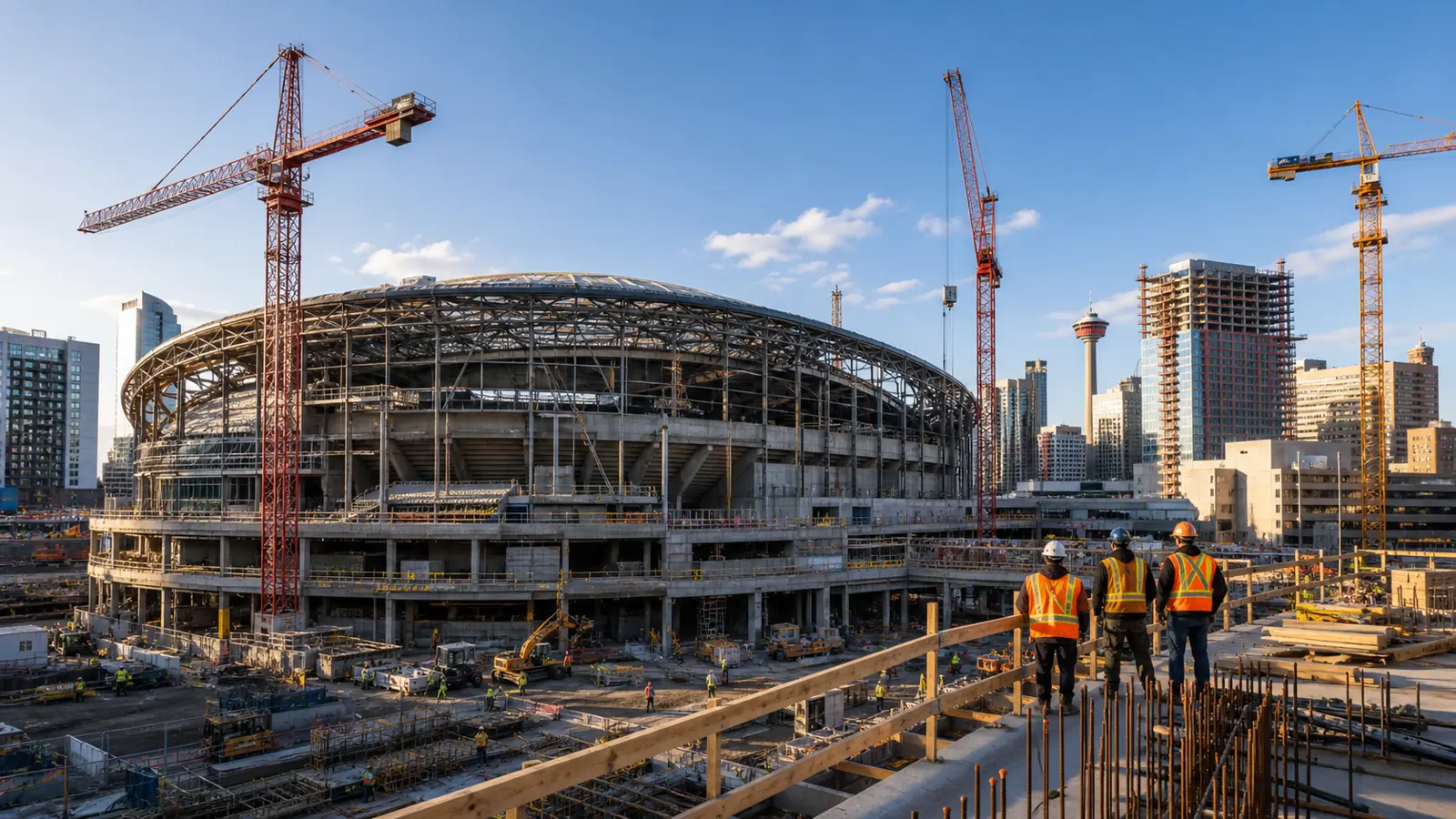
Calgary's most interesting construction story is no longer one building. It is the amount of major work landing in the same market at the same time. Scotia Place is in active construction and scheduled to open in fall 2027. One hotel is already under construction nearby, two more are advancing through approvals, and the district's streets, underpass and public realm are being rebuilt around them.
That creates several years of strong local demand. It also means Calgary's available capacity will be increasingly consumed by large, schedule-driven projects. Reliable commercial trades should expect fuller books, more competition for experienced people and less tolerance for late decisions through 2027, with the pressure likely carrying into 2028 as surrounding projects move into interiors, commissioning and turnover.
Scotia Place is becoming a building, not a rendering
Scotia Place moved from site preparation into foundation construction in January 2025 and remains scheduled to open in fall 2027. Work is advancing through 2026, with periodic road and sidewalk closures around the site as crews build the arena and connect it to a district that must keep functioning during construction.
The next 12 to 18 months should broaden the opportunity beyond heavy structure. As the building advances, demand shifts toward building systems, architectural packages, interior trades, finishes, specialty fabrication, commissioning and closeout. For Calgary contractors, that is where a marquee project begins touching a much wider part of the local supply chain.
The arena is pulling a district in behind it
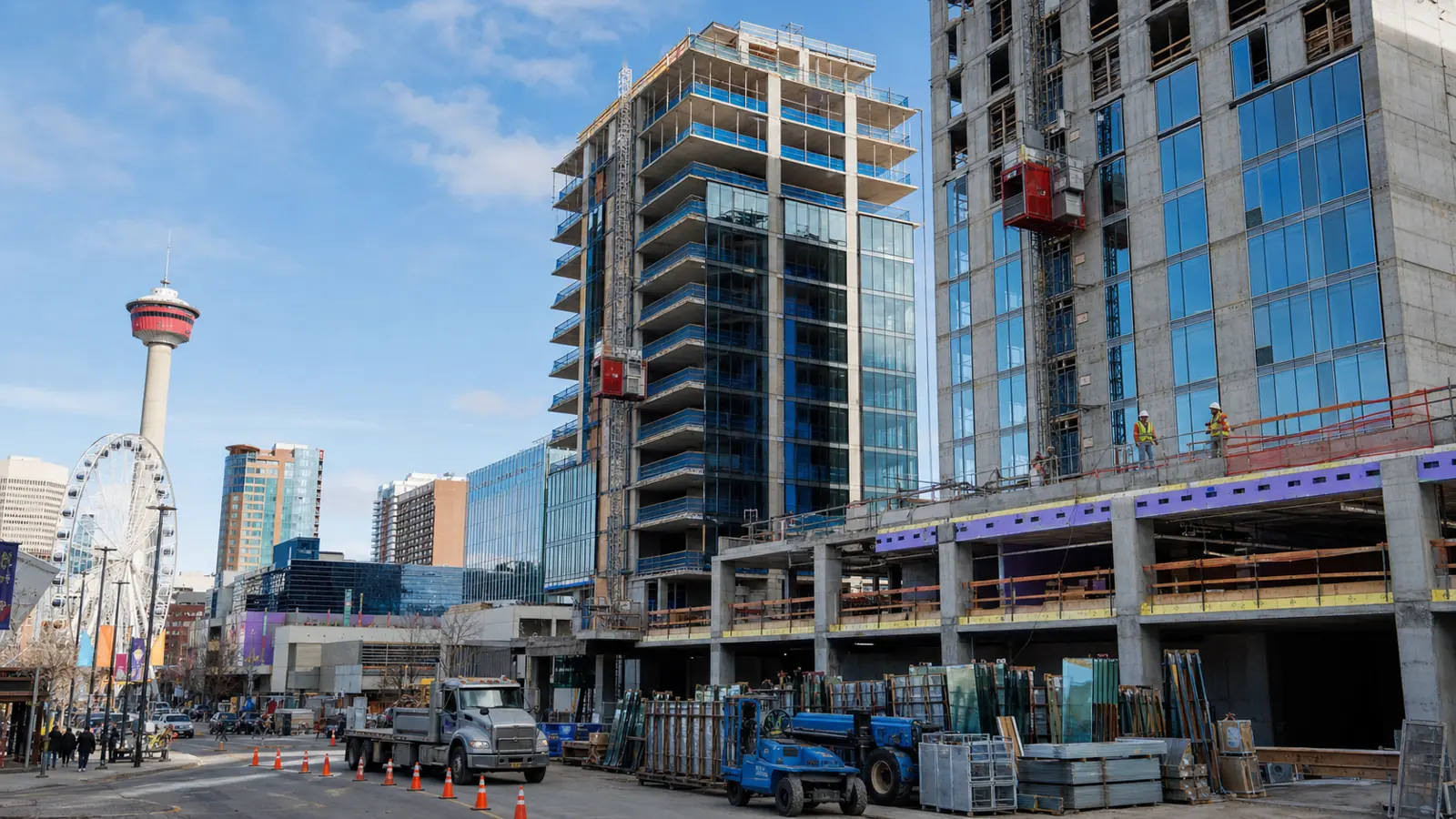
Stampede Park's Autograph Collection Hotel is under construction, while developer Truman is advancing regulatory approvals for two additional hotels. The Sixth Street S.E. underpass, Stampede Trail, roadway upgrades, streetscape work and district infrastructure are also active. This is becoming a cluster of overlapping projects rather than a single isolated arena job.
That matters because hotels are dense interior projects. They consume drywall, doors and hardware, millwork, flooring, tile, fixtures, furniture installation and finishing capacity late in their schedules. If the additional hotels proceed while Scotia Place and other nearby projects are still active, Calgary could see sustained competition for dependable commercial and finishing crews beyond the arena opening.
What this means for jobs, capacity and the local economy
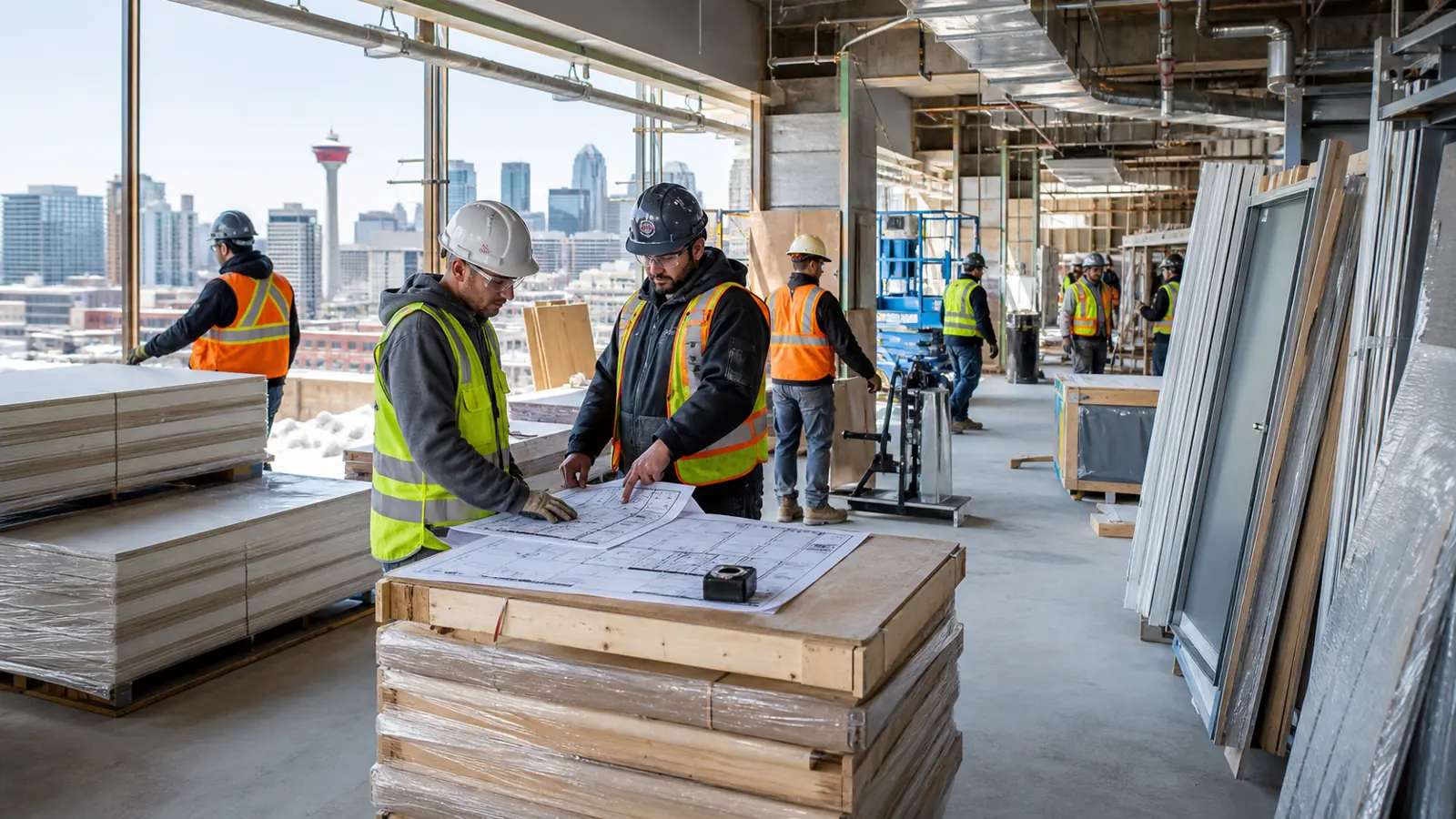
The immediate effect is positive: hundreds of crew members are already working in the Culture and Entertainment District each day. Those wages circulate through local restaurants, fuel, rentals, suppliers and service businesses, while project purchasing supports fabricators, distributors and subcontractors across the city. Closures and access changes will create short-term friction for nearby businesses, but construction spending is already landing in the local economy before the venues open. The bigger constraint is skilled capacity. Calgary should expect high demand for project managers, superintendents, coordinators and proven commercial trades through at least late 2027. The overlap with Green Line and other major programs can keep pressure elevated into 2028 and potentially longer. Good firms should gain pricing power and stronger backlogs, but labour costs, lead times and poaching risk will rise. Smaller projects may wait longer or pay more unless owners release decisions and materials early.
After opening, the economic effect changes shape. Scotia Place and new hotel rooms should increase event traffic, visitor nights, restaurant spending and demand for year-round operations, maintenance and hospitality jobs. The construction surge is temporary; the district's ability to attract events, conventions and private investment is the longer economic bet.
Green Line will deepen the capacity squeeze
Green Line construction is underway, with civil packages planned from 2026 through 2031 on the southeast segment. Those packages create work for civil contractors, suppliers and subcontractors while locking in experienced people and equipment for long stretches.
The opportunity is strongest for companies that know their exact lane. A clean specialty scope or dependable supply commitment is more valuable than chasing a mega-project for the logo. The market will reward firms that can state their capacity honestly and deliver without disrupting the larger sequence.
Two other infrastructure signals worth watching
The new Ivor Strong Bridge opened to Deerfoot Trail traffic on July 27 as part of the continuing southeast corridor improvements. It is a visible handoff, although surrounding work continues after the opening.
For local contractors, the lesson is closeout: traffic control, deficiencies, permanent operations and remaining work all have to coexist. The last ten per cent is where a project proves whether it was genuinely delivered.
The City reported in July that the Bearspaw South Feeder Main replacement remains on schedule and on budget. After the 2024 failure, this project carries unusual public pressure because reliable water service is the outcome that matters.
The work is less visible than an arena or bridge, but its utility conflicts, excavation, tie-ins and restoration compete for real construction resources. It is another reason Calgary's infrastructure workload should be viewed as one market-wide capacity story.
The move this week
Review the next 18 months of work and identify the person, trade or supplier your schedule depends on most.
Ask whether that capacity is actually committed. If it is not, secure it, develop a second source or change the sequence now. Calgary has work. The advantage will belong to companies that protect their capacity before the market uses it up.
If an upcoming Calgary project includes finish carpentry, architectural woodwork, wall treatments, fireplaces or interior millwork, Calgary Custom Concepts can review the scope early and help make it buildable.
Sources
- Scotia Place, “Construction Updates,” accessed July 31, 2026: https://www.scotiaplace.com/construction-updates
- Calgary Municipal Land Corporation, “A district taking shape,” June 2, 2026: https://www.calgarymlc.ca/articles/a-district-taking-shape
- CTV News Calgary, “With 2026 Calgary Stampede in the books, downtown construction ramps up,” July 17, 2026: https://www.ctvnews.ca/calgary/article/with-2026-calgary-stampede-in-the-books-downtown-construction-ramps-up/
- Government of Alberta, “Deerfoot Trail,” accessed July 31, 2026: https://www.alberta.ca/deerfoot-trail
- CBC Calgary, “New Ivor Strong Bridge to open as massive Deerfoot Trail project moves forward,” July 21, 2026: https://www.cbc.ca/news/canada/calgary
- City of Calgary, “2026 Bearspaw South Feeder Main Reinforcements,” accessed July 31, 2026: https://www.calgary.ca/planning/water/bearspaw-feeder-main/2026-bearspaw-south-feeder-main-reinforcements.html
- City of Calgary / Green Line LRT, “Construction underway, civil construction shortlist announced,” July 18, 2026: https://www.calgary.ca/green-line.html
Subscribe: https://calcustom.ca/calgary-built-brief/
Continue reading
Get the Calgary Built Brief
One sharp weekly read on the projects, constraints and decisions shaping Calgary construction. Managed directly by Calgary Custom Concepts.
No spam. Unsubscribe anytime.