
Choosing a wood species is one of those decisions that seems simple until you start looking at samples. White oak, red oak, maple, walnut, cherry, birch, MDF, veneer, rift cut, quarter sawn, stain grade, paint grade. Suddenly the “nice wood look” you had in mind turns into a pile of options.
For custom millwork, the right material depends on the room, the finish, the durability you need, the budget, and the look you want. A fireplace surround, mudroom bench, built-in shelving unit, feature wall, and closet system do not all need the same material.
Below is a practical guide to common wood species, with a deeper look at one of the most common questions we get: white oak vs red oak.

Why wood species matter in custom millwork
Wood species affect more than colour. They influence:
- Grain pattern: how busy, calm, rustic, or refined the finished piece feels.
- Hardness: how well it resists dents and daily wear.
- Stain response: whether it takes stain evenly or needs extra care.
- Moisture behaviour: how it responds to seasonal movement and Calgary’s dry interior climate.
- Cost: both material cost and the labour needed to finish it properly.
- Design style: some species lean modern and clean, while others feel traditional, warm, or rustic.
In Calgary homes, we also pay attention to humidity. Our interiors can get very dry in winter, which means solid wood needs proper acclimation, good finishing, and smart construction details. In many built-ins and wall features, the best solution may be a mix of solid wood, veneer panels, plywood, and paint-grade materials depending on the design.
White oak vs red oak: the quick difference
White oak and red oak are both strong domestic hardwoods commonly used for cabinetry, furniture, flooring, trim, and interior millwork. They can both look beautiful, but they do not create the same feeling.
White oak
- Usually has a light to medium brown colour, often with a slightly olive or golden cast.
- Has a strong grain pattern, but it can look cleaner and more refined than red oak, especially in rift cut or quarter sawn material.
- Is slightly harder than red oak, with a Janka hardness around 1,350 lbf according to The Wood Database.
- Has better rot resistance than red oak, which is one reason it has historically been used for barrels and boatbuilding.
- Often costs more than red oak, especially in select grades, thicker stock, or rift and quarter sawn cuts.
Red oak
- Usually has a light to medium brown colour with a more reddish or pinkish cast.
- Has a more open, porous grain structure. The grain can feel busier and more traditional.
- Is still a hard, durable wood, with a Janka hardness around 1,220 lbf according to The Wood Database.
- Is generally less rot resistant than white oak and can stain or discolour more easily when exposed to moisture.
- Is often more affordable and widely available than white oak.
Colour alone is not always a perfect way to tell them apart. Finish, stain, cut, board selection, and lighting all change the final look. But in design terms, white oak usually reads more modern and premium, while red oak often reads warmer, grainier, and more traditional.
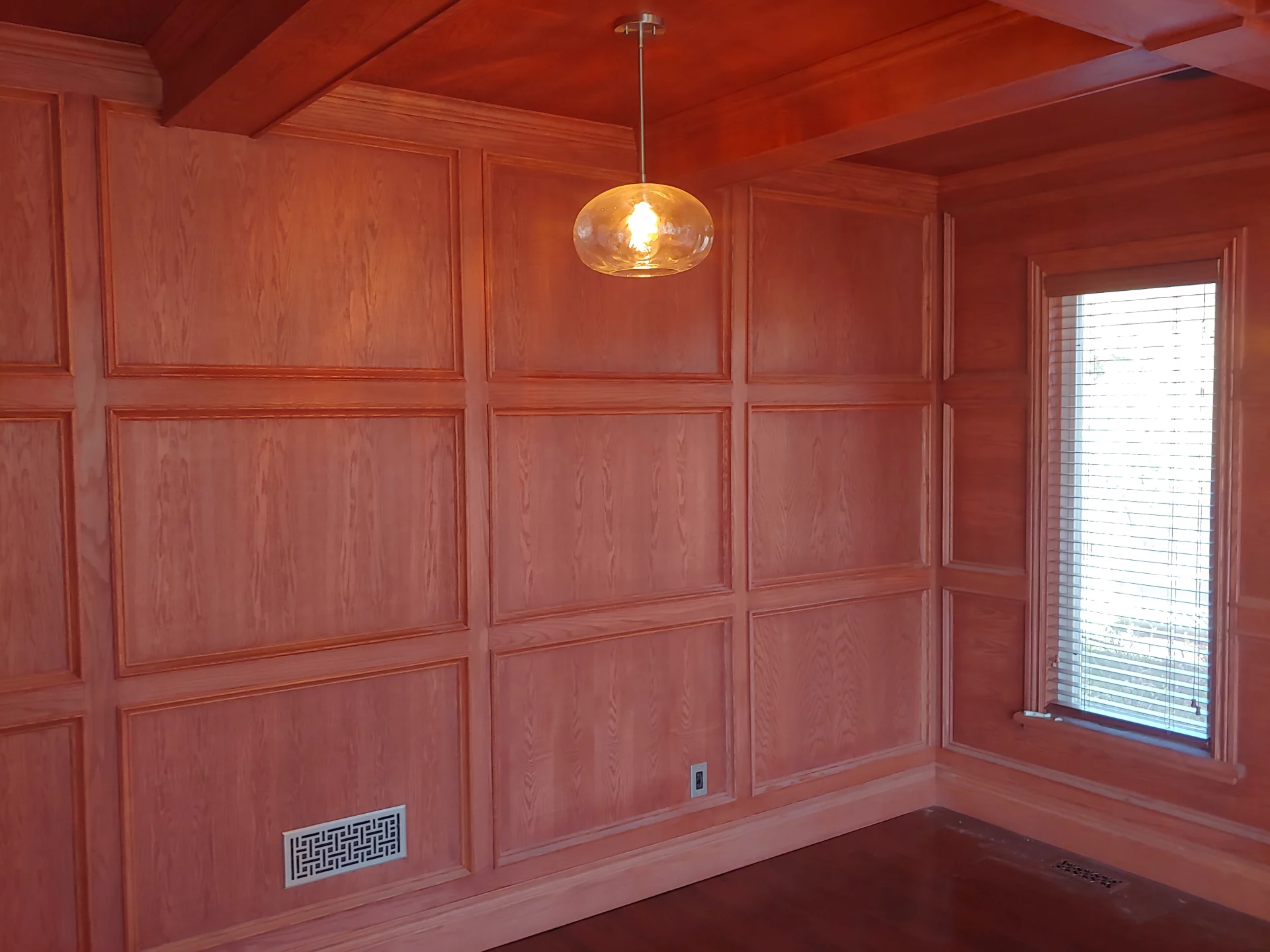
When to use white oak
White oak is one of the most popular choices for higher-end custom interiors right now, and for good reason. It works especially well when you want the wood grain to be visible but not chaotic.
Best uses for white oak:
- Custom built-ins
- Fireplace surrounds and mantels
- Floating shelves
- Slat walls and feature walls
- Cabinet doors and drawer fronts
- Stair and railing details
- Dining room or office millwork
- Wall paneling where the grain is part of the design
White oak is a strong option when the goal is warm, clean, architectural millwork. It pairs well with off-white walls, stone fireplaces, black hardware, natural fabrics, and modern transitional interiors.
For the cleanest look, ask about rift cut white oak. It has a straighter, calmer grain than plain sawn boards. It costs more, but for visible cabinet faces or modern built-ins, it can be worth it.
When to use red oak
Red oak is not “bad white oak.” It is a different material with a different look. It has been used in North American homes for decades because it is strong, workable, available, and cost effective.
Best uses for red oak:
- Flooring
- Traditional stair components
- Furniture
- Interior trim in homes that already have red oak details
- Cabinetry where a more pronounced grain is desired
- Budget-conscious stain-grade millwork
Red oak can make sense when you are matching existing wood in the home. If your floors, stairs, or railings are already red oak, using red oak for new details may create a more cohesive result than forcing in a trendy species that does not relate to the rest of the space.
The main caution is style. Red oak’s open grain and reddish undertone can fight against certain modern finishes. If the goal is a pale Scandinavian look, natural white oak is usually the better direction.
Other wood species worth considering
Maple
Maple is hard, smooth, and relatively subtle. It is often used for cabinets, drawers, closets, and furniture components. It can be excellent for painted or clear-coated work, but staining maple evenly can be tricky without the right finishing process.
Walnut
Walnut is darker, richer, and more dramatic. It is beautiful for statement pieces, built-ins, vanities, office millwork, and feature details. It is usually more expensive, so it is often used strategically rather than everywhere.
Cherry
Cherry has a warm reddish-brown tone that deepens over time. It can look elegant in traditional or classic interiors, but it is less common in modern Calgary millwork than white oak or walnut.
Ash
Ash has a strong grain pattern and good durability. It can be a good option when you want a bold, open grain, though availability and pricing can vary.
Paint-grade MDF and poplar
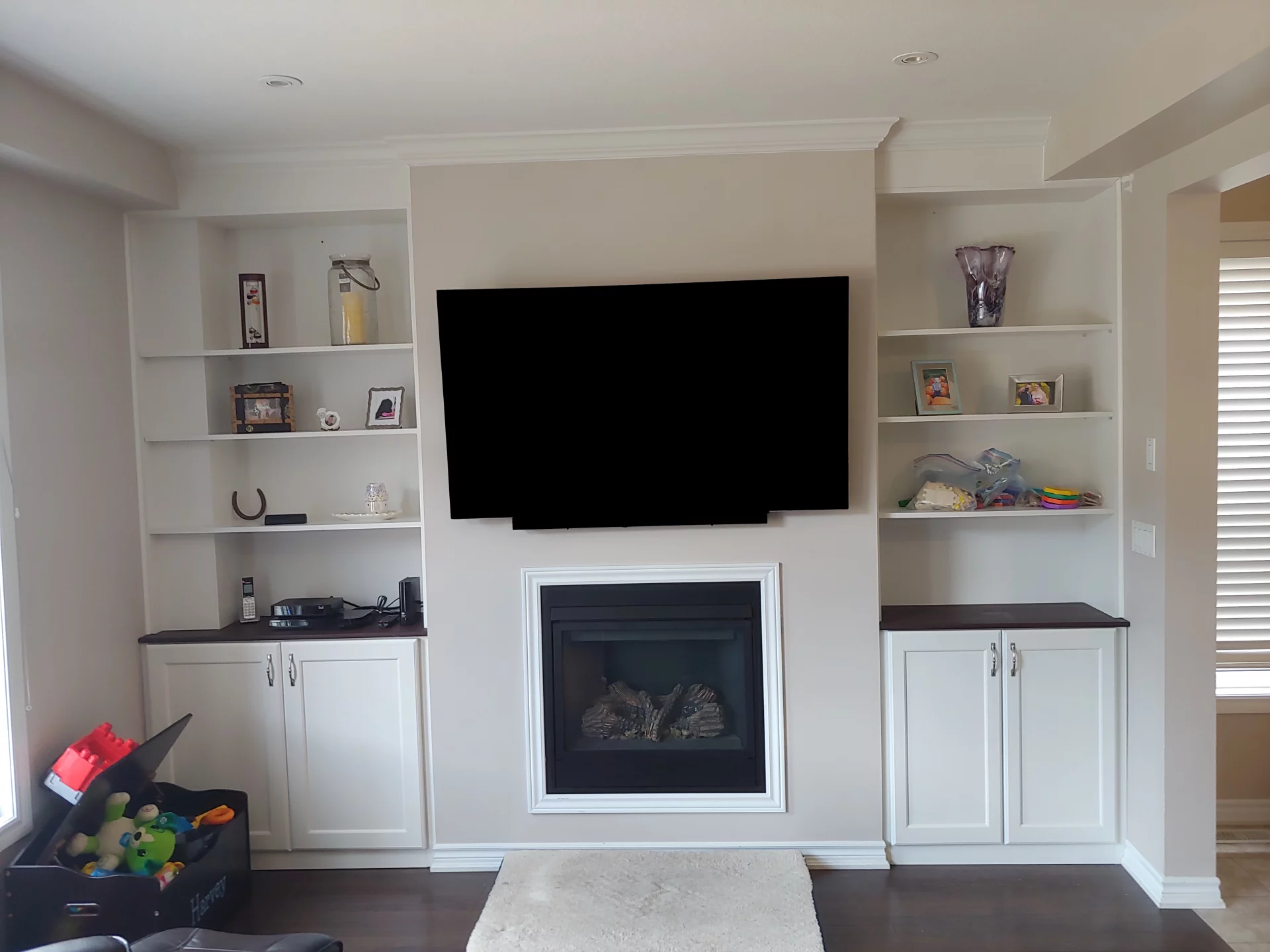
Not every project needs stain-grade hardwood. For painted feature walls, wainscoting, mudroom panels, and many fireplace surrounds, paint-grade MDF or poplar can be the smarter choice. They create a smooth finish and keep the budget focused where it matters.
Solid wood, veneer, or MDF?
This is where good millwork design matters. Homeowners often assume solid wood is always best, but that is not true for every application.
- Solid wood is excellent for edges, trim details, shelves, mantels, and pieces that need real thickness or shaping.
- Wood veneer over a stable core can be better for large flat cabinet panels because it reduces movement and keeps the grain consistent.
- MDF is often the best choice for painted panels, shaker details, and feature walls where a smooth painted finish is the goal.
- Plywood is useful for cabinet boxes, shelves, and structural parts that need strength and stability.
The best custom work often uses more than one material. The goal is not to use the most expensive wood everywhere. The goal is to use the right material in the right place.
So which wood should you choose?
Here is the simple version:
- Choose white oak for a clean, warm, premium look with visible natural grain.
- Choose red oak when matching existing traditional oak details or when budget and availability matter.
- Choose walnut for a rich statement piece.
- Choose maple for durable, subtle, clean cabinetry or interior components.
- Choose MDF or poplar when the final finish will be painted.
If you are planning custom built-ins, a fireplace wall, mudroom, closet, or feature wall, the best next step is not just picking a species from a sample board. It is looking at the room as a whole: floors, wall colour, lighting, furniture, hardware, and how the space gets used every day.
Need help choosing the right wood for your Calgary home?
If you are stuck between white oak, red oak, painted millwork, or another species, send us a photo of the room. We can help you think through what would look best, what will hold up, and where custom millwork will make the biggest difference.
Contact Calgary Custom Concepts or send us the room you are considering. We will help you choose a material that fits the space, not just the trend.
Reference: wood species data and Janka hardness values sourced from The Wood Database: White Oak and The Wood Database: Red Oak.