When homeowners start planning a custom carpentry or interior upgrade project, most conversations begin with how it will look. But the difference between a space that feels elevated for decades and one that starts to disappoint within a year often comes down to something less obvious: the quality of the build itself.
In Calgary, we see beautifully designed ideas fall short all the time — not because the vision was wrong, but because the execution wasn’t.
Here’s what truly separates fine carpentry from average builds, and why it matters more than most people realize.

1. Fine Carpentry Starts Before Anything Is Built
Average builds often begin with assumptions. Measurements are taken quickly, materials are selected based on availability, and the design is treated as a loose suggestion.
Fine carpentry begins with listening and planning.
A quality build starts with understanding how the space will be used, how it connects to the rest of the home, and what the homeowner actually values — not just what looks good online. This planning stage influences everything from proportions and spacing to materials and finishing techniques.
When planning is rushed, mistakes get built into the project. When planning is intentional, the end result feels effortless.
2. Precision is Not Optional
One of the clearest differences between average and fine carpentry is precision.
In an average build, gaps are filled, lines are “close enough,” and inconsistencies are hidden with caulking or paint. These shortcuts may look fine on install day, but they become obvious over time as materials shift and light exposes imperfections.
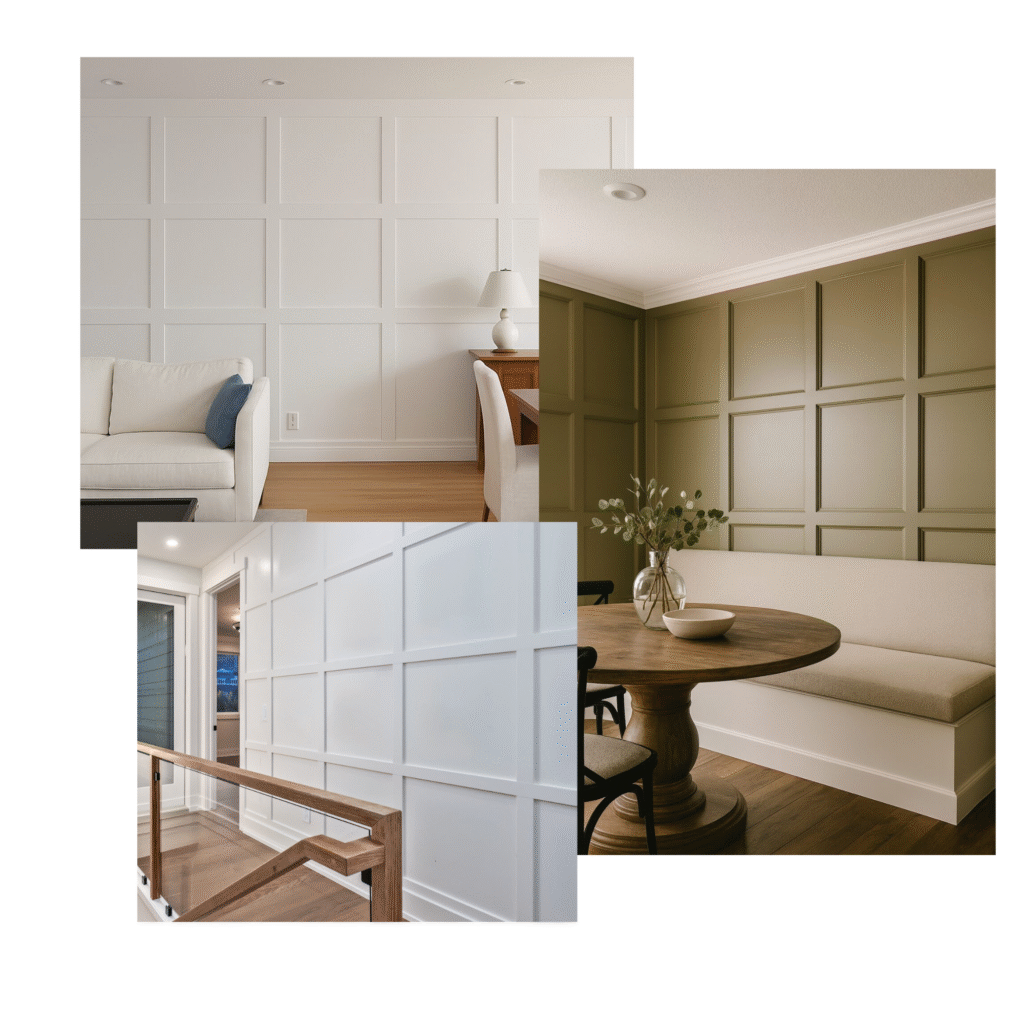
Fine carpentry relies on accurate measurements, clean joinery, and components that fit exactly as intended. Corners align. Panels sit flush. Transitions are deliberate.
This level of precision doesn’t just look better — it lasts longer.

3. Materials Are Chosen for the Space, Not the Price
Not all wood products behave the same way, especially in Calgary’s climate.
Average builds often default to materials based on cost or convenience. Fine carpentry selects materials based on durability, stability, finish quality, and how they will age in a specific environment.
This might mean choosing a different core material behind a painted panel, adjusting thickness to prevent warping, or selecting finishes that stand up to daily use. These decisions are rarely visible — but they directly affect how the space performs years later.
4. Details Are Treated as the Main Event
In fine carpentry, details aren’t an afterthought.
The way trim meets a wall, how a panel terminates at a corner, or how a built-in integrates with existing architecture all require intention. Average builds often treat these moments as problems to solve quickly.
Fine carpentry treats them as design opportunities.
These details are what give a space depth, balance, and a sense of craftsmanship that can’t be replicated with shortcuts.
5. The Finish Work Defines the Final Result
Finish work is where average builds often fall apart.
Uneven paint, rushed sanding, or inconsistent textures can undo otherwise solid work. Fine carpentry allocates time and expertise to finishing because it’s what homeowners interact with every day.
Smooth surfaces, crisp lines, and consistent finishes aren’t just aesthetic — they’re tactile. They affect how a space feels, not just how it photographs.

6. Fine Carpentry Is Built to Age Well
Trends come and go, but quality craftsmanship remains.
Fine carpentry prioritizes proportion, balance, and timeless construction techniques so that spaces still feel intentional years later. This doesn’t mean avoiding personality — it means building in a way that supports it long-term.
When carpentry is done well, homeowners don’t think about it. They simply enjoy the space.
Choosing the Right Team Matters
The difference between average and fine carpentry isn’t always obvious at first glance — but it becomes clear over time.
If you’re planning a custom interior project, choosing a team that values planning, precision, and craftsmanship will influence not just how your space looks, but how it lives.
At Calgary Custom Concepts, we take a listen-first approach to every project, ensuring that design and execution work together from the start.
If you’re considering a custom carpentry or interior upgrade project in the Calgary area, a thoughtful consultation can help clarify what level of quality makes sense for your goals. Contact Calgary’s experts today for your obligation and hassle-free quote/render here.