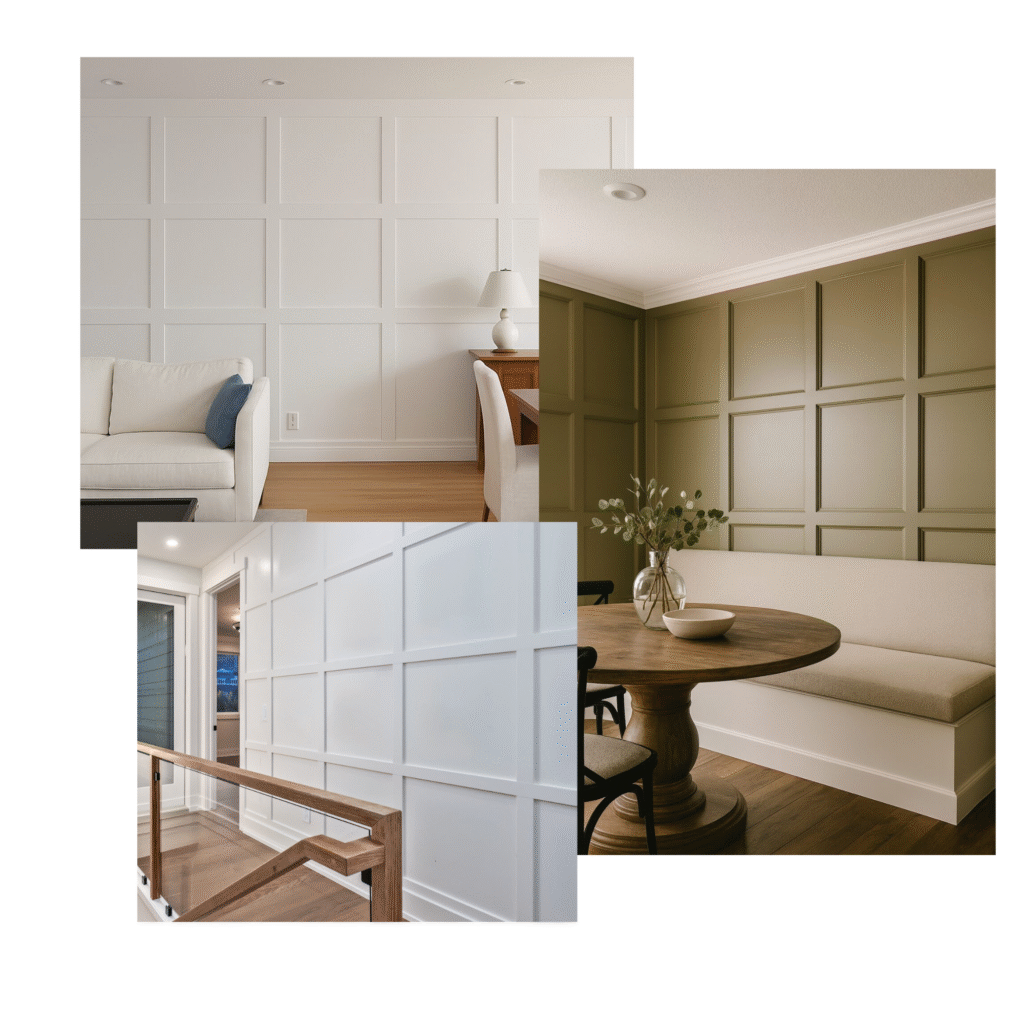
What Each One Is
Board and batten is a vertical paneling style: wide flat boards installed flush to the wall, with narrower strips (battens) covering the seams. It creates a clean, structured grid pattern — classic without being fussy. You’ll see it on everything from heritage farmhouses to modern new builds. Houzz has a solid visual library if you want to see the range of applications.
Shiplap is horizontal planking with a slight reveal between boards. The reveal (the gap where boards overlap or sit adjacent) is what gives shiplap its distinctive shadow line. It became a household term through the farmhouse design boom and remains one of the most searched interior styles. Architectural Digest has a good breakdown of how it works in different rooms.
Where Each One Works Best
Board and batten shines:
- Entryways and mudrooms (the vertical lines draw the eye up, making narrow spaces feel taller)
- Living rooms and dining rooms where you want structure and formality
- Half-height wainscoting applications with a cap rail
- Children’s rooms and bedrooms (versatile with color)
Shiplap shines:
- Feature walls in bedrooms (horizontal lines create calm, width)
- Bathrooms and laundry rooms (with the right moisture-resistant materials)
- Ceilings — shiplap on a ceiling adds character without dominating the room
- Cottage, farmhouse, or transitional interiors
Style Fit: Modern vs. Transitional vs. Farmhouse
Calgary’s new builds skew heavily toward transitional and modern design — open plans, neutral palettes, clean lines. Here’s how both styles map to that:
Board and batten works across all three. Painted white or off-white in a modern home, it looks architectural. In a farmhouse interior, it leans rustic. It’s one of the most versatile profiles we install.
Shiplap reads more specifically. In a true farmhouse or coastal interior, it’s perfect. In a very contemporary home, it can feel like a style mismatch — the reveal and horizontal lines carry a lot of stylistic weight. It can work in transitional spaces if the rest of the design is balanced, but it needs more intention.
Maintenance and Durability Notes
Both are durable when properly installed with quality materials. A few practical differences:
- Shiplap’s reveals collect dust — easy to wipe down, but worth knowing if you have allergies or young kids.
- Board and batten’s flat surface is slightly easier to repaint cleanly.
- Both should be primed and painted with a quality interior trim paint. Benjamin Moore’s Advance line is what we typically recommend for trim work — hard-wearing and leveling.
- In high-moisture areas (bathrooms), use MDF alternatives or solid wood and ensure proper ventilation.
Our Recommendation by Room
If you’re asking us what we’d spec:
- Living room feature wall: Board and batten or vertical slat — both work, depends on the vibe
- Bedroom accent wall: Shiplap if you want warmth and texture; board and batten if you want something cleaner
- Entryway: Board and batten, full stop
- Mudroom: Board and batten, ideally with a bench and hooks built in
- Bathroom: Shiplap or vertical planking, with the right paint and sealed edges
Still deciding? Take our 90-second quiz and we’ll match you to the style that fits your space.